

Richard Collins
20 October 2015
Ubuntu’s path to convergence
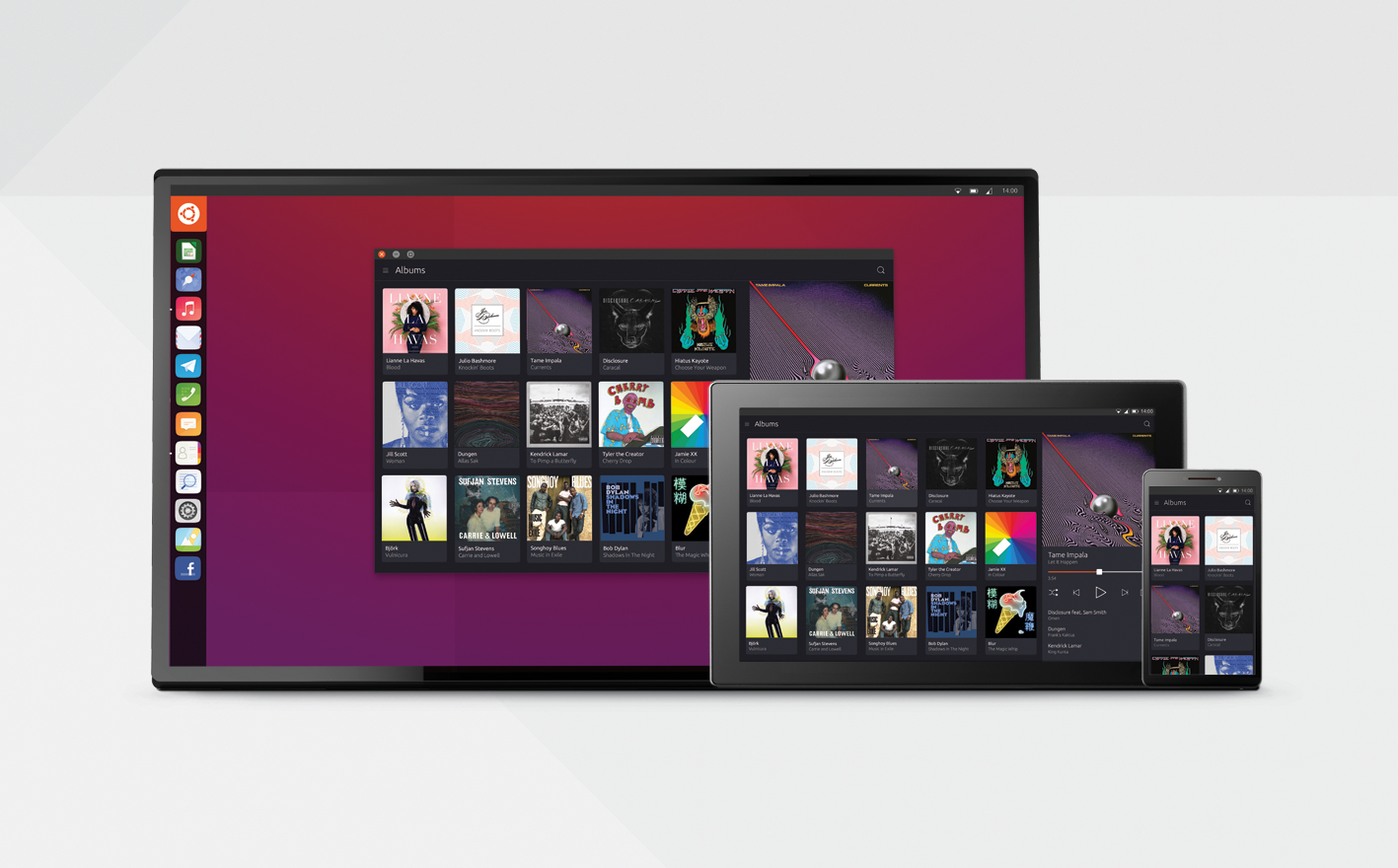
Ubuntu device convergence is now starting to happen as we move closer to bringing the first smartphones to market carrying a full Ubuntu desktop interface.
The real test for a smartphone which can double up as a PC is to give users the same experience from their smartphone as they get from their primary PC. This is our starting point for real smartphone convergence – to deliver an Ubuntu PC experience that embodies everything already familiar to the millions of Ubuntu desktop PC users worldwide. Quite simply, this means everything that a user expects from a PC experience has to be available from their smartphone including:
- Effortless multitasking and window management
- Full range of desktop applications and thin client support for mobility and productivity
- Integrated services with desktop notifications
- Ability to manage applications and easily organise favoured ones for fast access
- Simple file browsing, file and folder creation and management
- Responsive applications developed for both touch and point/click input and which re-shape to whichever UI is being displayed
- Comprehensive system control and access to the underlying OS if required
- Single application store with a range of compatible 3rd party services
- Communication from the desktop interface using the phone’s telephony and messaging applications
Our journey towards OS convergence first begins with Unity 8, Ubuntu’s User Interface and display framework, envisioned to run on all Ubuntu devices with the same underlying codebase, supporting a common infrastructure for application and service development. The goal for Unity 8 is to run as the primary display on any type of Ubuntu smart product.
This means applications have something no other OS can provide: a single, visual framework and set of tools for applications to run on any type of Ubuntu smart device. Applications developed for mobile will easily scale and run on a desktop display, with support for point and click input. Our SDK will provide tools for developers of mobile applications to build desktop contexts for these apps. Similarly, developers of desktop applications can use our SDK to extend and enhance their application for mobile use. Convergence brings a whole new set of contexts for developers and our SDK will provide the fundamental tools developers need to make their apps easy to adapt and run on any display.
When you see your application on the phone and then use that application on the desktop, it is the exact same code running each application. Ubuntu does not need to know if the app is coded for a mobile or desktop display rather it is the application that surfaces the appropriate interface depending on which display is required. Third party developers will be able to easily create new Ubuntu applications which only need to be developed once but which can be available and used across all Ubuntu interfaces.
We have been saying for some time that the evolution of the smartphone into a convergent form factor, delivering a PC experience, is a real and relevant industry need. However a truly converged smartphone or tablet designed with the combination of mobility and desktop productivity is only really achieved using an OS built on a single, fully contained codebase.


